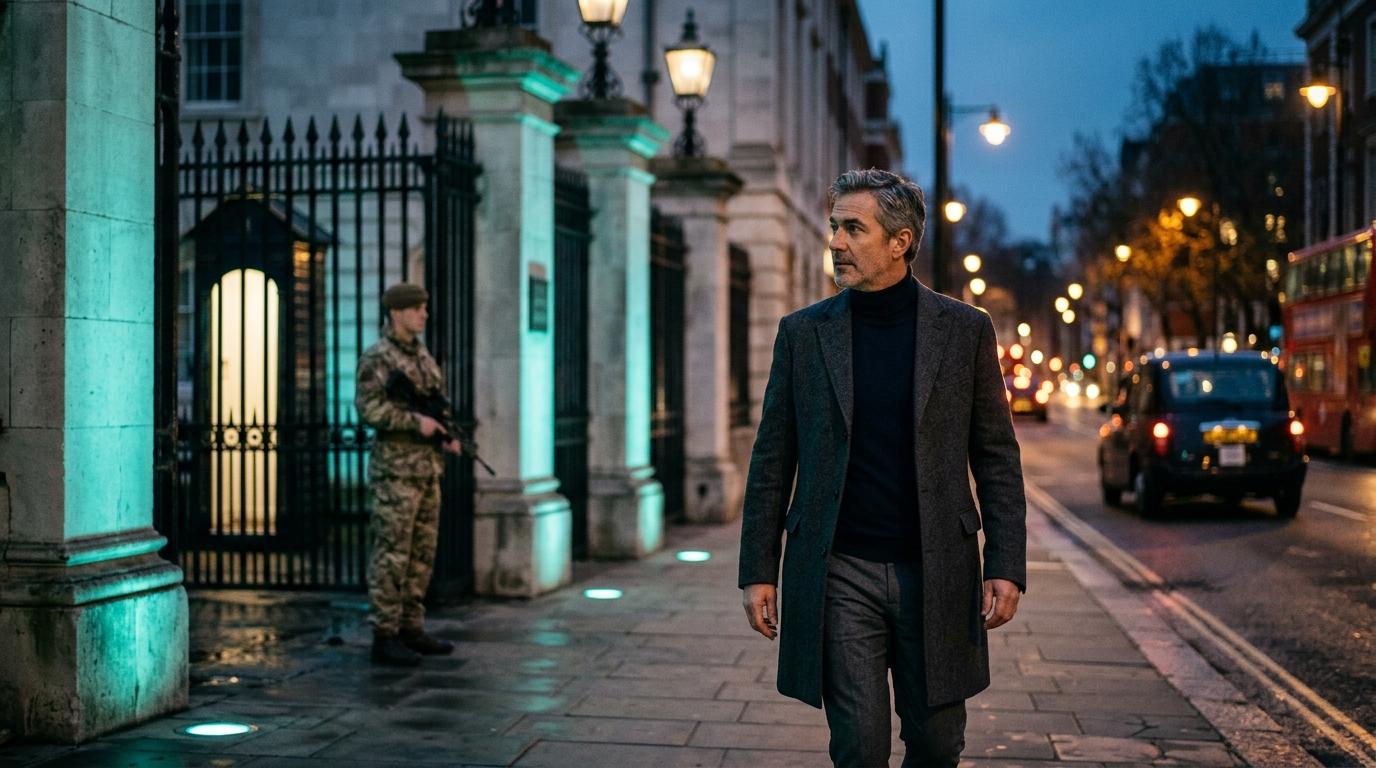
I remember the exact moment it hit me. I was walking out of a barracks in Central London after 22 years in the British Army, and I reached, out of habit, for my back pocket. For two decades my wallet had sat there, snug against my right glute, carrying my Army ID card and my Military Police warrant card. Now both were gone. There was no card to show at the gate and no warrant to produce. Apart from a couple of bank cards and a driving licence, nothing in that pocket said who I was.
I had joined as a Private and was leaving as a Warrant Officer Class 2 in the Royal Military Police, via the Special Investigation Branch and operational tours in Northern Ireland, the former Yugoslavia, Afghanistan and Iraq. In the space of a few paces I had become a civilian. Walking into civvy street for the first time was exciting and daunting at once.
If you're reading this, you've either taken that walk or you can see the gate ahead of you. You're not alone. In the UK, 13,500 people left the Regular Armed Forces in 2025 alone. Over 200,000 US service members transition from active duty to civilian life every year. And Australia's 2021 Census counted almost 500,000 ex-serving ADF members.Adjusting to civilian life after the military is one of the most common experiences our community shares. It's also one we're often least prepared to talk about.
Why transition hits service leaders differently
There is a paradox here. On paper, leaders are the best prepared. In Pew Research Center's 2019 survey of US veterans, 67% of former officers said the military had prepared them well for the transition to civilian life, compared with 48% of NCOs.
Yet preparation on paper isn't the whole story. A 2025 evidence review by the UK's Centre for Evidence for the Armed Forces Community found that people whose self-esteem is most closely tied to their military career tend to have harder transitions. Whether you were a commissioned officer, a Warrant Officer or a senior NCO, rank, responsibility and reputation took years to earn. They're part of how others saw you, and how you saw yourself.
The more of yourself you invested in the uniform, the more there is to rebuild when it comes off. This isn't weakness. It's what happens when you've been very good at something that no longer exists in the same form.
Here are the seven challenges I've seen most often, in myself and in the many veterans I've spoken with since, along with what helps with each.
Losing your identity
What it feels like: Someone at a barbecueasks, “So what do you do?” and you don't know how to answer. For years your rank, trade and unit said it all. Now you're “Daren”, and that feels strangely thin.
Why it happens: Military training builds a strong collective identity, deliberately. The shared values of selfless service, loyalty and camaraderie make units effective, but they also make the exit feel like losing part of yourself. The Centre for Evidence review highlights identity as a central, often overlooked factor in how well people transition.
What helps:
- Write down the values you're keeping, such as integrity, standards and looking after your people. They didn't belong to the Army; they belong to you.
- Practisea new one-line answer to “What do you do?” that includes where you're heading, not just where you've been.
- Give yourself permission to be “in between” for a while. Identity is rebuilt, not replaced overnight.
Losing the tribe
What it feels like: You're surrounded by pleasant colleagues, and lonely. Nobody gets the humour, and nobody has shared the things that bind people for life.
Why it happens: In a 2023 VFW / Sport Clips survey of 1,000 US veterans, 28% named parting ways with military friends as one of their top transition challenges. Service friendships are forged under pressure, and civilian workplaces rarely recreate that. Being honest it's the thing I struggled with the most.
What helps:
- Stay in touch deliberately: put it in the diary, as you would any other appointment.
- Join an association such as the RSL, Royal British Legion, VFW, American Legion or Royal Canadian Legion, or your corps or regimental association.
- Build new bonds through shared challenge: volunteering, sport, or mentoring someone who is a few steps behind you.
Losing purpose
What it feels like: The job pays the bills, but Monday mornings feel flat. Nothing you do now seems to matter the way operations did.
Why it happens: The same VFW survey found that 28% of veterans named finding a purposeful career as a top challenge. In uniform, purpose is handed to you with the mission. In civilian life, you have to define it yourself.
What helps:
- Ask what problem you want to spend the next ten years solving, not just which job title fits your CV.
- Look for work where your judgement under pressure matters: investigations, emergency management, security, operations, teaching or leadership development.
- Tell your story well so the right employers find you. Our guide to military LinkedIn profile tips shows you how. Read more
No structure or routine
What it feels like: No reveille, no daily orders, no battle rhythm. Days blur, and you find yourself oddly unsettled by all that freedom.
Why it happens: 23% of veterans in the VFW survey named the absence of familiar routine and structure as a top challenge. The survey also found the average adaptation period was about seven months. That's a useful reminder that feeling unsettled early on is normal and temporary.
What helps:
- Build your own battle rhythm: a fixed start time, physical training and a weekly review.
- Set short-term objectives with deadlines, just as you would for any task.
- Keep one or two non-negotiables from service life that anchor your day.
The culture clash
What it feels like: Meetings that end with no decision. Deadlines treated as suggestions. People who say “not my job”. You bite your tongue, often.
Why it happens: A ten-year Swedish study by Jan Grimell, published in Frontiers in Sociology in 2024, followed service members through the transition to civilian life. It found that frustration with civilian attitudes to responsibility grew over time rather than fading. As one participant put it: “people do not take responsibility. They make excuses all the time.”
The same study found a downside to the strength we bring. For some participants, a relentless military work ethic contributed to burnout and declining health, because the mission always came before self-care.
What helps:
- Assume different, not worse. Civilian organisations run on different incentives, and understanding them makes you more effective.
- Pick your battles. Not every lapse needs a correction.
- Manage your own work rate. The ethic that got you through operations can grind you down in a job that never has an “end ex”.
Leading people who didn't sign up to be led
What it feels like: You give a clear direction and nothing happens. Or it happens, but you hear later that you came across as “intense”.
Why it happens: Military leadership rests on a clear chain of command, shared doctrine and people who volunteered to be led. Civilian leadership mostly runs on influence. Authority is often ambiguous, decisions are made by consensus, and your team can simply leave for another employer. For former officers and senior NCOs, this is often the sharpest adjustment of all, and it's rarely covered in transition briefings.
What helps:
- Lead with the why. Commander's intent translates perfectly, so explain the purpose before the task.
- Swap orders for questions. “What would it take to get this done by Friday?” earns more ownership than “Have it done by Friday.”
- Build relationships before you need them. Influence in civilian organisations is earned sideways as well as downwards.
- Learn the local language. Replace military jargon (SITREP, O-group, “wilco”) with plain English until you know what lands.
- Keep your standards, but adapt your delivery. Your people still want clarity, fairness and someone who has their back. Those were always the best parts of military leadership.
Your family is adjusting too
What it feels like: You're home more, and somehow there's more friction, not less. Routines your family built while you were away don't have a slot for you.
Why it happens: Transition isn't a solo event. In the VFW survey, 29% of veterans credited the support of a spouse or partner as key to their transition. That support is precious, and your partner is navigating their own change of identity and routine at the same time.
What helps:
- Talk openly about expectations: who does what, and what each of you needs.
- Recognise that your family may have lost a community too, such as the patch, the base or the other families.
- Read our family guide to military homecomings. Many of the same reintegration principles apply when service ends for good. Read more
What actually helps: a practical checklist
Adjusting to civilian life after the military is a process, not a single event. From my own experience and from the veterans I've worked alongside, these make the biggest difference:
- Start early. The best time to plan your transition is two years before you leave. The second-best time is today.
- Integrate, don't erase. The research points the same way: keep the parts of your military identity that serve you well and let the rest go. You don't have to stop being a soldier to become a good civilian.
- Find a new mission. A cause, a craft or a business: something worth getting up for.
- Reconnect with your people through the Royal British Legion (UK), the RSL (Australia), the VFW or American Legion (US), or the Royal Canadian Legion (Canada).
- Use the support you've earned. In the UK, the Career Transition Partnership and Op Courage. In Australia, that means the DVA Veteran White Card and Open Arms. In the US, the Transition Assistance Program (TAP). In Canada, Veterans Affairs Canada. For job-hunting, see our top tips for veterans seeking employment.
- Reach out early, not late. Australia's Royal Commission into Defence and Veteran Suicide found that the first 12 months after leaving are a period of higher risk. Asking for support early, whether from mates, family or professionals, is a sign of good judgement, not weakness.
If you're struggling, talk to someone today. All of these services are free, confidential and available 24/7.
- UK: Combat Stress helpline, 0800 138 1619 (text 07537 173683) · NHS Op Courage veterans' mental health service: find your regional team
- Australia: Open Arms – Veterans & Families Counselling, 1800 011 046
- US: Veterans Crisis Line, dial 988 then press 1 (or text 838255)
- Canada: VAC Assistance Service, 1-800-268-7708
If you are in immediate danger, call emergency services: 000 (Australia), 999 (UK), 911 (US and Canada).
Close the chapter well
When I walked out of that barracks, I had no ceremony to mark what had just ended, only a slightly lighter wallet and a large canvas holdall. Looking back, I wish I'd paused to honour the journey before rushing into the next one.
Every career in uniform is a map of places, postings and people. Marking where you served, and what it meant, is a powerful way to close one chapter with pride before you open the next. It's also a way to show your family where you were all those years, and why it mattered. (If you're curious about how service stories have been preserved over the generations, read the history of military service records.)
That's why we built Veteran Waypoints: to turn a service record into an animated journey across the globe, one waypoint at a time. It's something you can keep and share, or give to a veteran you love.
Frequently asked questions
How long does it take to adjust to civilian life after the military?
It varies widely. In a 2023 VFW / Sport Clips survey of 1,000 US veterans, the average adaptation period was about seven months, and veterans faced an average of three major challenges along the way. For many, especially after long careers, full adjustment of identity and purpose can take longer, and that's normal.
Why do veterans miss the military?
Most veterans don't miss the hardships. They miss the tribe, the purpose and the clarity. Military life provides close-knit friendships, a clear mission and a shared set of values. Research on veteran identity shows these bonds often stay important long after service ends, which is why rebuilding community is so important.
Is it harder for officers to transition to civilian life?
Not necessarily on paper. Pew Research found 67% of former officers felt well prepared, compared with 48% of NCOs. But leaders often have more identity and status invested in their military role, and adapting from command authority to civilian influence can be a significant adjustment.
What does "civvy street" mean?
"Civvy street" is British and Commonwealth military slang for civilian life, the world outside the armed forces. "Going back to civvy street" means leaving the military, and the phrase is still widely used by service members in the UK, Australia and Canada.
Sources
- VFW / Sport Clips veteran transition survey (2023): https://www.vfw.org/media-and-events/latest-releases/archives/2023/11/veterans-day-news-new-survey-finds-top-challenges-facing-veterans-in-the-transition-to-civilian-life
- Pew Research Center: How veterans readjust to civilian life (2019): https://www.pewresearch.org/social-trends/2019/09/10/readjusting-to-civilian-life/
- Centre for Evidence for the Armed Forces Community: The role of identity in transition (2025): https://www.centreforevidence.org/news/20250808-evidence-points-to-the-important-role-of-identity-in-transition
- Grimell, J. (2024), Frontiers in Sociology: https://www.frontiersin.org/journals/sociology/articles/10.3389/fsoc.2024.1406710/full
- Performance.gov: Navigating the transition to civilian life: https://www.performance.gov/cx/life-experiences/navigating-the-transition-to-civilian-life/
- Congressional Research Service: Military Transition Assistance Program (TAP), R48114 (2024): https://www.congress.gov/crs-product/R48114
- UK Ministry of Defence: Quarterly service personnel statistics, 1 January 2026: https://www.gov.uk/government/statistics/quarterly-service-personnel-statistics-2026/quarterly-service-personnel-statistics-1-january-2026
- DVA: Australia's veteran support system at a glance: https://www.dva.gov.au/about-us/what-we-do/australias-veteran-support-system-at-a-glance
- Royal Commission into Defence and Veteran Suicide: Final Report Volume 5 (2024): https://defenceveteransuicide.royalcommission.gov.au/publications/final-report-volume-5