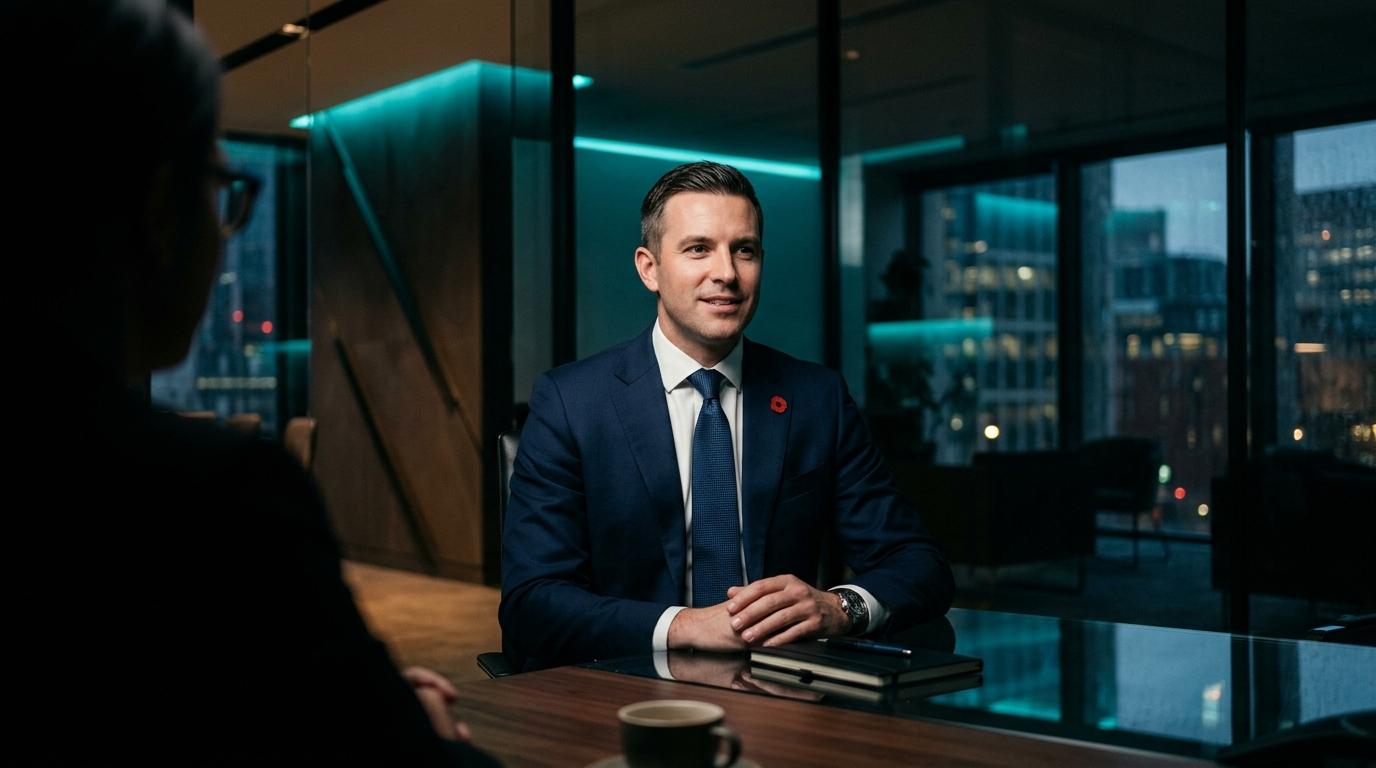
Leaving the military is one of the most significant transitions any service member will face. After years — sometimes decades — of structure, camaraderie, and purpose, stepping into the civilian job market can feel like deploying to a country where nobody speaks your language.
The good news? The skills you built during service are exactly what employers are looking for. The challenge is learning how to present them. Whether you served two years or twenty-two, these ten tips will give you a tactical advantage in your transition.
Translate Your Military Skills into Civilian Language
Your MOS, trade code, or branch specialty tells a fellow veteran everything about your capabilities. To a civilian hiring manager, it's alphabet soup. The single most impactful thing you can do is reframe your experience in business-ready language.
Instead of: “Platoon Sergeant, responsible for 30 personnel across multiple AOs.”
Try: “Operations Team Lead — managed a cross-functional team of 30 across distributed locations, accountable for performance, welfare, and multi-million-dollar equipment.”
Hiring managers understand leadership, logistics, risk management, and accountability. Those are the words that get you past the applicant tracking system (ATS) and into the interview room.
Build a Civilian Resume That Tells Your Story
A strong resume does more than list job titles. It tells the story of where you've been, what you've done, and the impact you've made. For veterans, that story often spans continents.
Structure your resume with a clear Professional Summary at the top that immediately recognises your military background, followed by a Key Skills section mapping your military competencies to civilian equivalents, then your Service History presented in reverse-chronological order.
Did you know you can add a QR codeto your resume that links to an interactive 3D globe showing every posting and deployment of your career? Imagine a recruiter scanning your CV and instantly seeing your global service journey play out on-screen. That's the kind of detail that sets your application apart from the stack. Create your journey on Veteran Waypoints and download the QR code to embed directly in your resume.
Leverage Veteran-Specific Job Boards & Programmes
Don't limit yourself to general job boards. There are platforms built specifically for veterans by people who understand military backgrounds:
- Forces Employment Charity — free career coaching, resume reviews, and job matching specifically for veterans.
- LinkedIn Veterans — LinkedIn offers a free Premium subscription for veterans during their first year of transition.
- GOV.UK Great Place to Work for Veterans — government roles that give preference to veterans during hiring.
Get Your Credentials & Certifications Recognised
Military training is world-class, but it doesn't always come with a civilian-recognised certificate. Bridge that gap early:
- Project Management Professional (PMP) — your operational planning experience translates directly.
- Six Sigma / Lean — process improvement skills honed across deployments.
- NEBOSH & IOSH qualifications — health and safety credentials that carry weight in industry.
- Trade equivalencies — the Career Transition Partnership (CTP) can help map military trade qualifications to civilian equivalents.
Network Beyond the Mess Hall
In the military, your network is built in. In the civilian world, you have to be intentional about it. The good news? Being a veteran is one of the most powerful networking credentials you can have.
- LinkedIn — update your headline to include “Veteran” and your target industry. Recruiters actively search for veteran candidates.
- Veteran associations (RBL, RFCA) — these aren't just for remembrance. Many run active mentoring and career networking events.
- Transition seminars & career fairs — attend every one you can, even before your discharge date. Employers at these events want to hire veterans.
Prepare for the Culture Shift
The military runs on hierarchy, directness, and clearly defined roles. Corporate culture can feel... different. Understanding these shifts ahead of time prevents friction:
- Direct orders, clear chain of command
- Briefings are concise and action-focused
- Rank determines authority
- “Roger” means understood
- Consensus-driven decisions, matrix reporting
- Meetings can be exploratory and open-ended
- Influence often matters more than title
- Jargon changes by industry — learn it fast
This isn't about losing your military identity — it's about adding a new layer. The veterans who transition most successfully are the ones who bring military discipline and standards while adapting to the rhythm of their new environment.
Target Veteran-Friendly Employers
Not every company understands military service, but many actively seek veterans. These employers have dedicated veteran hiringprogrammes, onboarding support, and a culture that values what you bring:
- Defence & aerospace — BAE Systems, Lockheed Martin, Thales, Raytheon, Northrop Grumman
- Technology — Amazon (Military Talent programme), Microsoft MSSA, Salesforce Vetforce
- Consulting & finance — Deloitte, JPMorgan Chase, Booz Allen Hamilton (strong veteran pipelines)
- Emergency services & government — police, fire, border agencies, and civil service roles that value discipline and crisis experience
Look for the Armed Forces Covenant (Gold Award) badge — it signals genuine investment in veteran talent, not just lip service.
Use Your Security Clearance as an Asset
If you held a security clearance during service, you have a significant competitive advantage. Clearances are expensive and time-consuming for employers to obtain for new hires. In manydefence and intelligence sector roles, having an active (or recently lapsed) clearance puts you at the front of the queue.
Platforms like DV Cleared Jobs and specialist defence recruiters actively seek cleared candidates. Even if your clearance has lapsed, the fact that you once held it demonstrates trustworthiness and vetting — qualities employers value.
Invest in Education & Upskilling
Your government may be willing to fund your next qualification. Take full advantage of veteran education benefits:
Enhanced Learning Credits (ELC) provide up to £2,000 per year across three years for approved courses. The Career Transition Partnership (CTP) offers free vocational training, workshops, and one-to-one career advice.
Look After Your Mental Health During Transition
Let's be honest: transition is hard. Leaving a community where everyone understands you and entering one where most people don't can be isolating. That's normal, and acknowledging it isn't weakness — it's the kind of self-awareness that makes good leaders.
There are support services designed specifically for veterans going through this period:
- Combat Stress & SSAFA — specialist veteran mental health charities with free confidential helplines.
- Peer support groups — connecting with other veterans who've recently transitioned can be the most effective support of all. You're not the first to feel this way, and you won't be the last.
Your service mattered. Your wellbeing during and after transition matters just as much.
Your Next Mission Starts Now
Military service teaches you to adapt, overcome, and lead under pressure. Those qualities don't expire when you take off the uniform. The civilian workforce needs what you bring — it just needs you to tell your story in a way it can understand.
And if you want a powerful way to showcase that story? Create your Veteran Waypoints journey — a cinematic 4K video of your entire service career, mapped across the globe. It's a fitting tribute to your service, a compelling addition to your professional profile, and a story your family will treasure for generations.