Family Guide
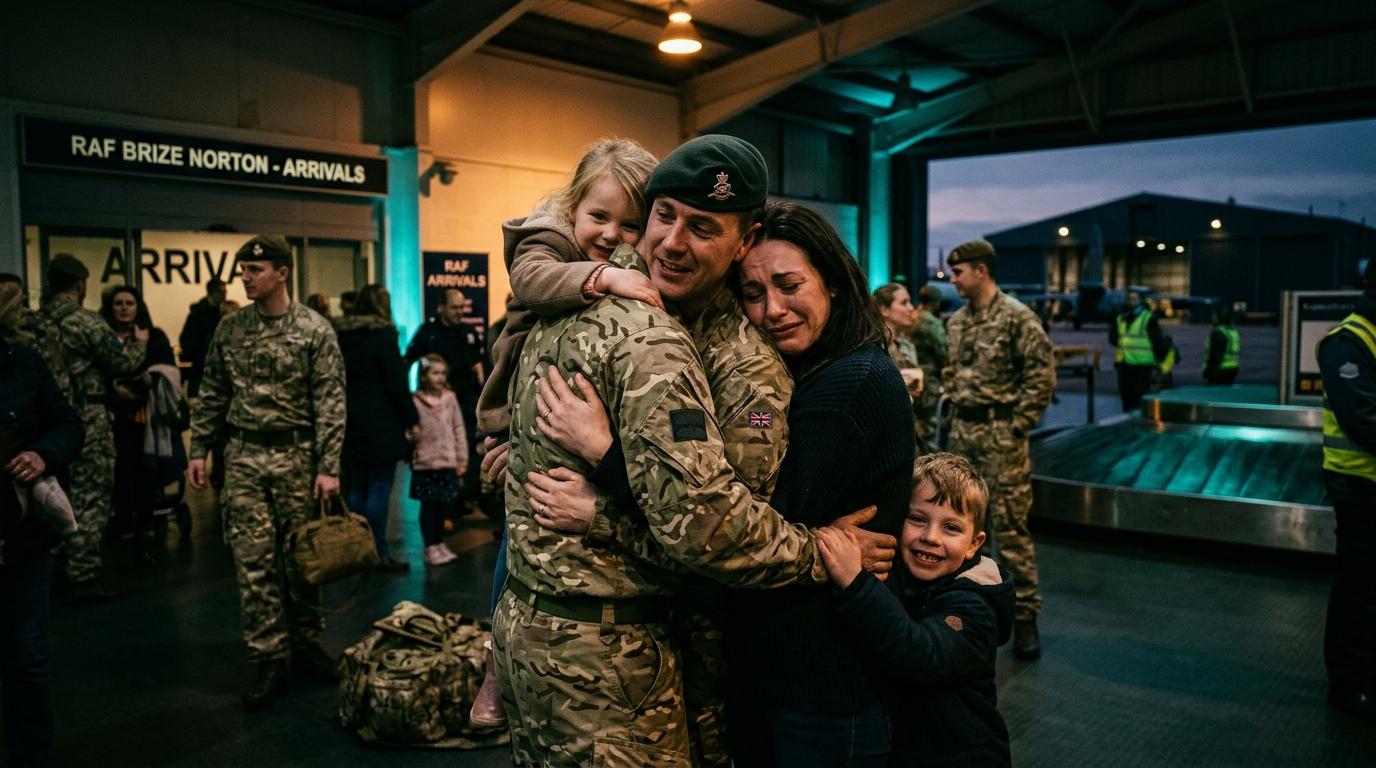
A military homecoming is one of the most emotional days a family will ever experience – and one of the least understood. The videos you've seen online capture thirty seconds of it: the running hug on the tarmac, the child who didn't know Dad was coming, the tears in the arrivals hall. What those clips don't show is everything around that moment – the weeks of nervous preparation before it, and the months of quiet readjustment after it.
This guide is for the families standing on the other side of the barrier: what to expect emotionally, how to prepare children, how to navigate the reintegration period that follows, and meaningful ways to celebrate – including a welcome home military gift that honours not just the return, but the whole journey that led to it.
What Actually Happens on Military Homecoming Day
The logistics vary by service and country, but the shape of the day is similar everywhere. Families are usually notified of a return window rather than an exact time – and that window moves. Flights get delayed, ships hold off the coast, buses from the airhead take longer than promised. Rule one of homecoming day: build flexibility into everything, and don't plan a dinner reservation for two hours after the scheduled arrival.
Depending on the unit, there may be a formal element – a march into a hangar, a short address from the commanding officer – before families are released to reunite. It can feel agonising to stand behind a rope line watching the person you've missed for months stand in formation fifty metres away. Veterans will tell you those final minutes are the longest of the entire deployment for them too.
Practical preparation makes the day easier. Confirm base access requirements in advance – ID for every adult, vehicle passes if needed – and arrive earlier than you think necessary, because parking at a homecoming is its own campaign. Pack for a long wait: water, snacks, layers, phone chargers, and entertainment for children. If extended family want to attend, check numbers against any limits the unit has set, and agree beforehand who gets the first hug. It sounds trivial until the moment arrives and four people move at once.
EXPECT: Delays, last-minute changes, big crowds, patchy phone signal at bases, and an emotional wave that hits differently than you imagined. Whatever you feel in that moment – joy, relief, awkwardness, even numbness – is normal.
The Emotions No One Warns You About
Here's the truth experienced military families learn: the reunion is a moment, but reintegration is a season. Psychologists who study deployment cycles describe a “honeymoon” phase lasting days or weeks, followed by a renegotiation period that can take three to six months. During deployment, the at-home partner built new routines, made unilateral decisions, and became the household's sole behaviourreferee. The returning service member walks back into a family that functioned without them – which is both a relief and, quietly, a grief.
- For the returning member: sleep disruption, hypervigilance in crowds, irritation at small chaos (a loud supermarket, an unmade decision), and guilt about missed milestones are all common and usually temporary.
- For the at-home partner: it's normal to feel protective of the routines you built, and even to resent handing back responsibilities you mastered. Talk about roles explicitly rather than letting them collide.
- For everyone: go slow. Don't schedule every relative's visit in week one. The returning member often needs quiet more than parties.
Communication in the final weeks before the return sets the tone. Talk about expectations honestly while you're still apart: what the first day should look like, what's changed at home, what each of you is nervous about. Couples who name the awkwardness in advance – “we might feel like polite strangers for a few days, and that's okay” – tend to move through it faster than couples who expect the movie version and then panic when real life is quieter and clumsier than the script.
Preparing Children for the Big Day
Children experience military reunions on their own timelines, and age changes everything. A toddler may not recognisethe returning parent and may cling to the at-home parent at the exact moment everyone expects a picture-perfect hug. Prepare the returning parent for this – it isn't rejection, it's development, and it usually melts within days.
A few military reunion tips that families swear by: in the weeks before the return, normalisethe returning parent's presence – photos at child height around the house, recorded bedtime stories, countdown paper chains. On the day itself, let children carry something to do (a sign they made, flowers to hand over) so the waiting has a purpose. And afterwards, let the returning parent re-enter discipline and routines gradually rather than on day one.
Older children and teenagers may act cooler than they feel. Don't force big emotional displays; a teenager who shrugs at the airport may still want an hour alone with the returning parent that evening. Give every child their own re-connection moment rather than one shared spectacle.
One more military family homecoming tip that costs nothing: brief the children on what the day will actually look like. Tell them about the waiting, the crowds, the possibility of delays, and exactly when they'll be allowed to run. Children handle almost anything they've been prepared for and struggle with almost everything they haven't. A five-minute conversation the night before prevents most of the tears that aren't the happy kind.
How to Celebrate a Military Homecoming Meaningfully
Banners, balloons, and the first proper home-cooked meal in months – the classics exist because they work. But the most treasured welcome home military gifts tend to be the ones that honour the journey itself, not just the arrival.
- Ask before you plan big. Some returning members dream of a crowd; many dream of a sofa. A surprise party for someone craving quiet is a gift for the guests, not the guest ofhonour.
- Mark the milestone, not just the moment. A deployment is a chapter in a longer story of service. Gifts that capture the whole arc – a shadow box, a photo book, a service journey film – outlast the balloons by decades.
- Include the children. A homemade banner they painted themselves will be remembered longer than anything bought – and it gives them a stake in the day.
The day itself
Keep it small and personal: their favourite meal, their own bed, a quiet first evening. Save the extended-family barbecue for the second week, when the returning member has found their feet.
The lasting gift
Commission a Veteran Waypoints journey – a cinematic 4K globe animation tracing every posting of their career as flight paths across the world. Enter their postings, and the film is theirs to keep, share, and show the grandchildren one day.
Families often play the animation at the homecoming gathering itself – there is something about watching a decade of service sweep across a globe in ninety seconds that says “we see what you did” better than any banner. The video comes in three formats (vertical for phones, square for social media, landscape for the living-room TV), and every purchase donates 10% to veteran charities. If the returning member is also leaving service soon, the included Resume QR Code links to their interactive journey page – a surprisingly practical touch for the CV they're about to write.
Support Resources for Military Family Homecoming
Most reintegration bumps smooth out with time and patience. But if weeks turn into months and sleep, mood, or connection aren't recovering, reaching for support early is a strength, not a failure. Every region has dedicated services for military families:
- SSAFA, the Armed Forces charity, supports serving families and veterans; Army Families Federation, Naval Families Federation, and RAF Families Federation offer service-specific guidance; and Combat Stress provides mental health support for veterans and their families.
- Unit welfare and family readiness teams exist precisely for this season – they have seen every version of a bumpy reintegration and can connect you to help quickly.
Watch for the signs that professional support would help: persistent sleep problems beyond the first month, withdrawal from family life, heavy drinking, anger that arrives faster than it used to, or a partner who feels like a stranger long after the honeymoon phase should have passed. None of these mean something is broken – they mean a person is processing something enormous, and processing goes better with help. The families who come through reintegration strongest are almost never the ones who needed no support; they're the ones who asked for it early.
The Homecoming Is a Moment. The Story Is Forever.
A military homecoming compresses months of longing into a single embrace – then hands the family something harder and better: ordinary life together again. Be patient with the season that follows the moment. Celebrate loudly, reintegrate slowly, and ask for help without shame if you need it.
And when you want to give them something that lasts longer than the banner, gift them their journey – every posting, every country, every chapter of their service rendered as a cinematic globe animation they'll keep forever. Prefer to build it together as a family project? Start on the create page, and find more guides for military families on our blog. Built by a 22-year British Army veteran, with 10% of every purchase going to veteran charities.